Living in Fribourg suits people who want a real Swiss town with a medieval center, a river gorge and two languages in the same street. It is a place where a family from Manchester, Mumbai or Minneapolis can learn French or German at the school gate and in the bakery. This page walks you through what to expect, in the order that matters when you are still abroad.
Where Fribourg is and what it feels like
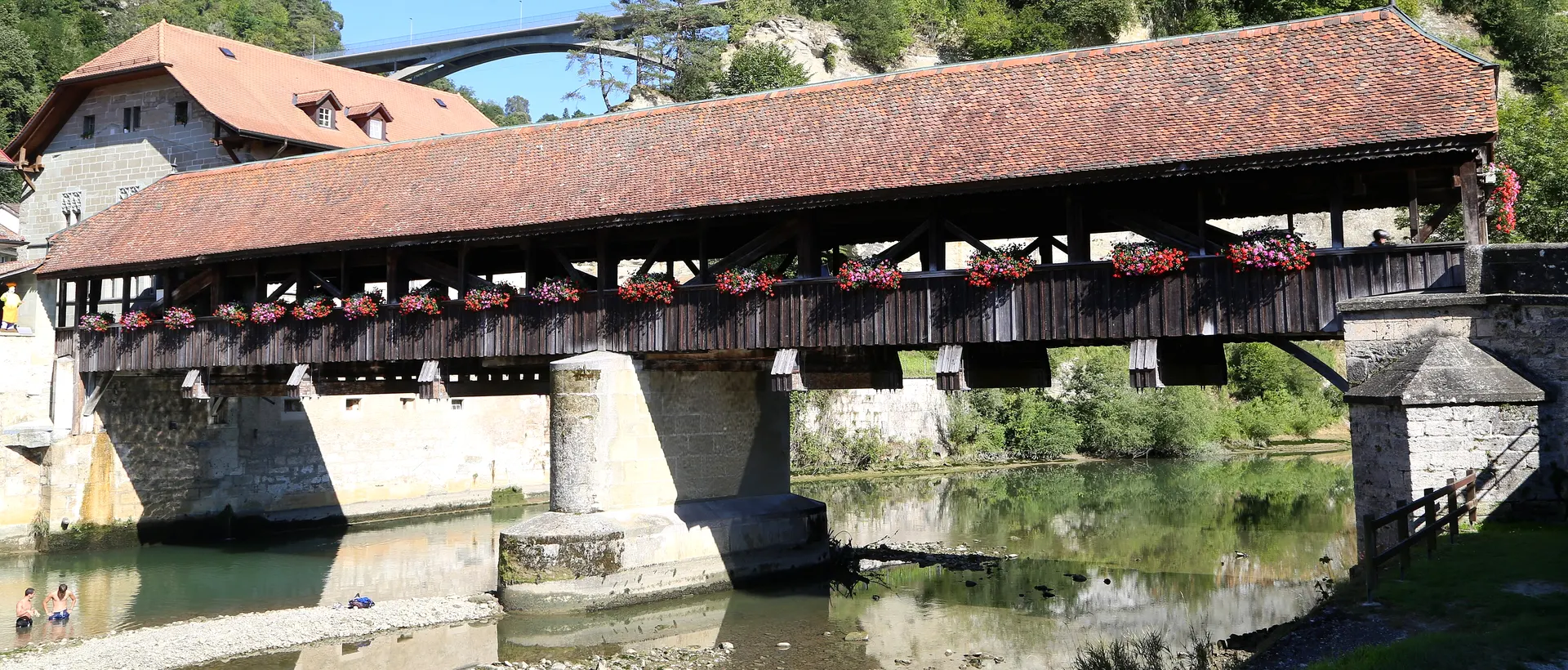
Fribourg sits between Bern and Lausanne, on a river that cuts a deep gorge through the old town. Old stone bridges, steep lanes and a cathedral give it a compact, walkable feel. It is also a university town, so cafés and student life add energy to the calm.
According to the Federal Statistical Office (FSO), the city had a permanent resident population of 39,599 people in 2025. Of them, 15,952 were foreign nationals, or 40.3% (FSO, 2025). In other words, you will not be the only newcomer, and neighbors are used to hearing many accents.
Many arrivals compare it with nearby cities. If you are still deciding, the city comparison tool lines them up, and our pages on Bern, Lausanne and Neuchâtel cover the neighbors.
Language: French, German and a bit of both
The canton of Fribourg is officially bilingual in French and German, as the Swiss Confederation notes in its multilingualism overview. The city itself is mostly French-speaking, though this is a general impression and not a figure from official statistics. German is part of daily life too, in shops, at work and in the surrounding villages.
For newcomers this is a gift. Whichever language you pick up first, you will hear the other one every day. English works in many offices and cafés, but official letters, school notices and rental contracts usually arrive in French or German. Our guide to learning the local language shows how to start before you leave home.
Housing: what the numbers say
The FSO does not publish a rent figure for the city alone, so the best guide is the canton average. Rents here are lower than in the big business centers, and the market is busy but not frozen.
The FSO reports an average net rent of CHF 1,328 per month across all dwelling sizes in the canton of Fribourg (FSO, 2024). The vacancy rate across the canton was 1.26% on 1 June 2026 (FSO). The rate for the city alone has not been published in the sources we use, so treat the canton figure as a rough background only.
The chart below shows the canton average by number of rooms, as published by the FSO.
Here is what that means in practice. A couple might look at two or three rooms, which the FSO puts at CHF 1,074 and CHF 1,299 (FSO, 2024). A family with children often searches for four rooms, at an average of CHF 1,539 (FSO, 2024). Individual listings can sit above or below these averages, especially in the old town or near the station.
How the search usually goes
- Decide on a commune. Villages around the city are often quieter and cheaper, and they are linked to the center by local transport.
- Prepare a rental file from abroad: ID, proof of income, a short letter about your household. The rental file check takes two minutes.
- Book viewings for your first days on the ground, or ask a local contact to attend.
- Learn the vocabulary: régie (property manager), bail (lease), garantie de loyer (rent deposit).
Cost questions are easier with the bigger picture, so see the cost of living in Switzerland, and the comparisons with the US and the UK.
Schools and children
Public schools teach in French or German depending on the section, so one of the first family choices is the language of instruction. Younger children usually settle quickly. Teenagers may find it harder, and some families look at private or international options. We have no verified official list of international schools for the city, so ask the canton or the school directly.
The school choice tool helps you think through school types before you talk to the authorities.
Getting around
Fribourg is on the national railway network and is small enough to cross on foot. Journey times, connections and passes to Bern, Lausanne or the airports are best checked on the national railway timetable when you know your address. We do not quote times or fares here.
Your first days: registering and the migration office
Arrival is mostly paperwork, and it follows a clear order.
- Before you leave: gather passports, civil documents, your contract or lease, and proof of health insurance.
- On arrival: report your arrival to the commune. Under the information we hold, this is generally due within 14 days, though the exact deadline can vary by commune and canton, so confirm locally (ch.ch). Bring ID, your residence or work permit and proof of health insurance.
- Then: the cantonal migration office, the Service de la population et des migrants (SPoMi), handles permits. Its official page explains the process for the canton.
Your permit depends on your nationality and situation. The permit finder gives a first idea, and immigration support explains how a specialist can review your situation. Authorities decide on permits, and nothing here is assured.
For the bigger sequence, the relocation calendar and the personal checklist builder turn all of this into dates.
A quick example
Imagine a couple with two school-age children arriving from Singapore for a job in Bern. They choose Fribourg for calmer rents and a French-speaking school. They prepare their rental file at home, book a week of viewings, then register with the commune on arrival. Their children start school in French while the parents take evening classes. Every family is different, so treat this only as an illustration.
Frequently asked questions
Is Fribourg French or German speaking?
Both. The canton is officially bilingual, and the city is mostly French-speaking. You will hear German daily as well.
Is English enough to live in Fribourg?
It helps in many workplaces and cafés. Official letters, leases and school notices are normally in French or German, so learning one of them is worthwhile.
How many people live in the city?
The FSO counts 39,599 permanent residents for 2025 (FSO). About 40.3% are foreign nationals (FSO).
Is Fribourg cheaper than other Swiss cities?
The canton average rent of CHF 1,328 per month is a useful reference (FSO, 2024). The FSO gives no city-only figure, so compare with care. The city comparison tool can help.
How hard is it to find a home?
The canton's vacancy rate was 1.26% on 1 June 2026 (FSO), so competition is real. A complete rental file prepared before you arrive makes a difference.
Where do I register after I arrive?
At your commune. The registration deadline is generally 14 days, but it varies by commune and canton (ch.ch), so confirm it locally.
What do I bring to register?
Generally your ID, residence or work permit and proof of health insurance. The commune confirms the exact list.
Which office handles permits?
The cantonal migration office, SPoMi. Its official page is linked above.
Are there international schools?
We could not verify an official list. Ask the canton or the schools directly, and use the school choice tool to compare school types.
Can I live in Fribourg and use airports in other cities?
Yes, the town is on the national rail network. Check connections on the timetable once you know your address.
Who can help me plan the move?
You can send a request and the right relocation partner is matched to your needs. See also relocation services.
Sources
- Federal Statistical Office (FSO), permanent resident population
- Federal Statistical Office (FSO), average net rents
- Federal Statistical Office (FSO), vacant dwellings
- State Secretariat for Migration (SEM), cantonal migration authorities
- Swiss Confederation, Presence Switzerland, multilingualism
- ch.ch, the Swiss authorities' portal