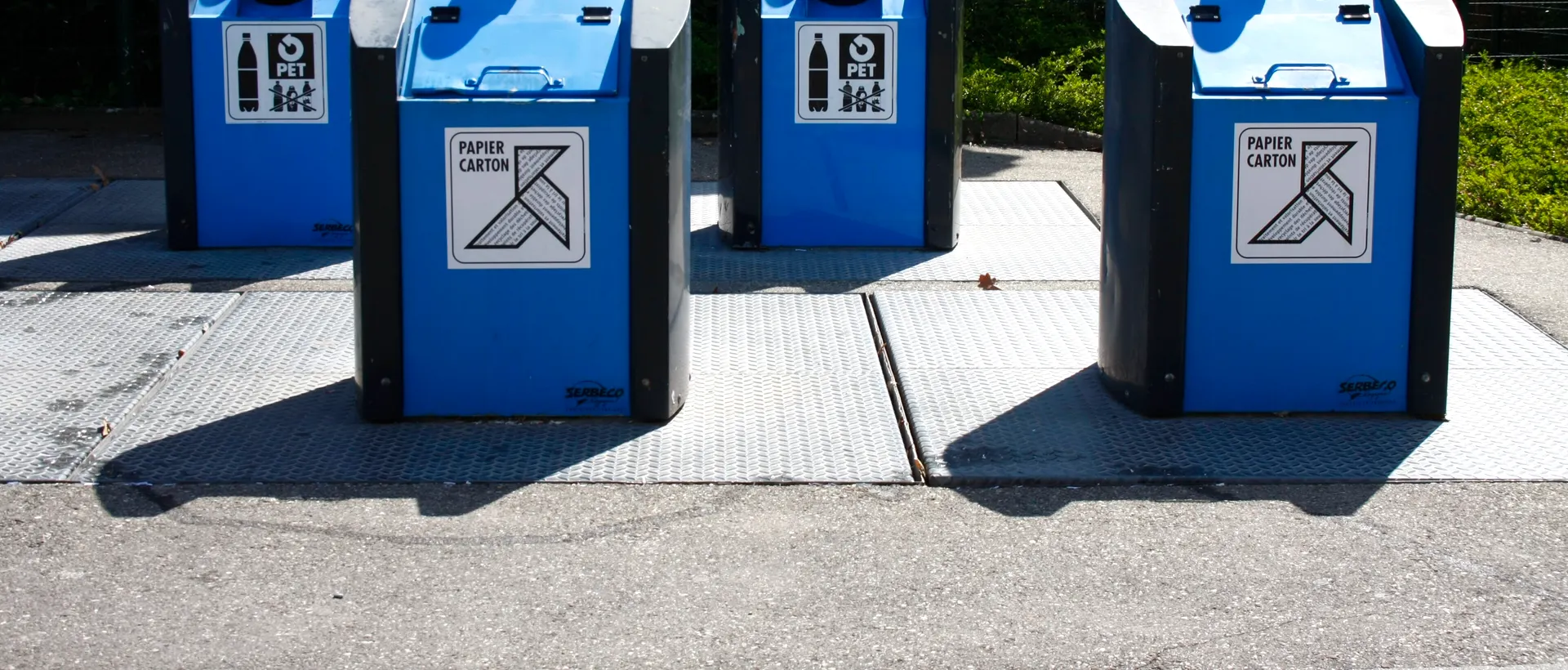
Nobody tells you about the bins before you move. Then, in your first week, a neighbor mentions that your bag is the wrong one, or that the washing machine should not run on Sunday. Swiss recycling rules, quiet hours and neighbors are not hard to learn, but they are local, and they are rarely written in English.
This guide explains how the system works, who sets the rules, and what you can prepare from abroad.
The short version
Three things shape everyday life in a Swiss building:
- The commune (Gemeinde) decides how household waste is collected and what you pay for it.
- The house rules (Hausordnung) decide how the building is shared: laundry, noise, stairwell, bikes.
- Your neighbors decide, in practice, whether a small slip becomes a problem.
The rules differ from one commune to the next, and often from one building to the next. That is why the cantons matter even for something as small as a trash bag. Always treat your own commune's leaflet and your own lease as the final word.
Recycling: how sorting works
Most communes collect general household waste only in official, marked bags or with an official tag. Bags bought in an ordinary shop are often not accepted, and a collector may leave an unmarked bag behind. The official bags usually carry the cost of collection, which is why the system is often called "pay as you throw".
Other materials go to separate collection points. Common ones are:
- glass, often sorted by color;
- paper and cardboard, collected on set days and tied in bundles;
- metal cans and aluminum;
- plastic bottles, often taken back at shops;
- batteries and small electrical items;
- food and garden waste, in some communes.
Your commune publishes a waste calendar, usually on its website and often in your mailbox. It lists collection days and local drop-off points. Many communes also run a central collection yard for bulky items.
Your first week
When you register with your commune, ask for the waste leaflet. Registration is normally required within 14 days of arrival, and the exact process can vary by commune or canton (see ch.ch). Staff at the counter can usually tell you where to buy official bags and which collection day applies to your street.
Example: a couple arriving from Singapore finds that their building has a shared bin room. They photograph the sorting chart on the wall and keep it on their phone. It takes a minute and avoids a first awkward conversation.
Quiet hours: what "rest time" means
Switzerland has a tradition of rest periods. In general, they cover the night, Sundays and public holidays, and some buildings also keep a quiet period around midday. The details are set by the commune, the canton and your house rules, so the hours differ from place to place.
What counts as noise? Think of anything that carries through walls and floors:
- vacuum cleaners and drills;
- loud music or a television at high volume;
- children running or jumping late in the evening;
- washing machines in buildings with shared laundry rules;
- glass bottles dropped into a collection container at the wrong time.
Normal living sounds are accepted. The expectation is not silence but consideration, especially in the evening and on Sundays.
If you are not sure, ask your landlord or property manager for the exact times in writing before you sign. A specialist can also tell you how local rules apply to you through the request at the bottom of the page.
The house rules and shared spaces
The Hausordnung is a document that comes with many leases. It may cover:
- the laundry room, often with a booking schedule or a rota;
- use of the garden, balcony and barbecue;
- bikes, strollers and shoes in the hallway;
- cleaning of the stairwell, sometimes by turns;
- visitors, pets and smoking;
- what to do with bulky waste.
Read it before you move. Check the laundry rule especially, because shared machines surprise many newcomers from the United States, India or Japan, where in-unit machines are more common.
If you plan to bring an animal, see moving with a dog, cat or ferret. Pets can also be covered by house rules.
Checking the lease and the file you give a landlord is part of a good rental process. The rental file check can help you see what is missing before you apply.
Neighbors: the unwritten part
Swiss neighbors usually greet each other. A short "hello" in the stairwell is normal, even if you will not speak again that day. Many people also introduce themselves when they arrive, or leave a short note on the door before a party.
Here are a few habits that help:
- Greet people you meet in the hallway, in the local language if you can.
- Warn neighbors before a move-in, a party or noisy work.
- Return shared spaces clean and on time.
- Talk first, write later. A kind word usually solves a small issue.
Example: a family from Toronto with two young children lets their neighbors know that the first weeks will be loud while the kids settle in. The neighbors respond with advice about the nearest playground and the right bin day.
For more on the culture side, see fitting in.
Before you leave home
You can prepare a lot from abroad:
- Ask the landlord or manager for the house rules and the laundry arrangement.
- Ask which commune the address belongs to, and look for its waste calendar.
- Check whether your belongings include items that need special disposal; see shipping your belongings.
- Plan a moving day that respects rest times, and tell the neighbors.
- Add the commune registration to your moving checklist.
- Look at a typical timeline to see where these steps fit.
Comparing the rules at a glance
Frequently asked questions
Do I really need official trash bags?
In many communes, yes. Collectors may refuse bags that are not official or tagged. Ask your commune where to buy them, since the rules differ from place to place.
Where do I put glass?
Usually in a collection container near your building or in the neighborhood. Glass is often sorted by color. Your commune's calendar tells you where the containers are and when you may use them.
Can I recycle on Sundays?
Often not. Many communes do not allow glass drop-off on Sundays, public holidays or at night. Check the local rules and the hours posted at the collection point.
What happens if I put out the wrong bag?
The collector may leave it behind, and the commune may contact you. Most newcomers get a friendly reminder first. Ask your commune what applies in your case.
Who collects bulky items?
This is handled locally. Some communes run a collection yard, others organize a collection on set days. Your commune office can explain how it works.
Are there rules for cardboard?
Yes. It is usually flattened, tied in a bundle and left out on a set day. Your waste calendar gives the details.
Are shops involved in recycling?
Often, yes. Many shops take back plastic bottles, batteries and small electrical items. The commune or the shop can tell you which items they accept.
How do I find my commune's waste calendar?
Look on the commune website or ask at the registration counter. The calendar is also often delivered by mail or posted in the building.
Are quiet hours the same everywhere?
No. They depend on the commune, the canton and the house rules. Ask your landlord for the exact times in writing.
Is Sunday really silent?
It is a day of rest, so noisy work is generally avoided. Normal living is fine. Tell your neighbors if you plan something louder.
Can I use the washing machine late in the evening?
It depends on your building. Shared laundry rooms often have a schedule, and some buildings limit evening use. Read your Hausordnung.
What if my children are noisy?
Children are part of life in a building, and neighbors generally expect that. Consideration matters most in the evening. A short word with your neighbors usually helps.
Can I host a party?
Usually yes, with some care. Tell your neighbors in advance, keep an eye on the time and check your house rules for any limit.
Can I move in on a weekend?
That depends on the building and the commune. Moving can be noisy, so many people choose a weekday and tell their neighbors in advance.
Is the Hausordnung legally binding?
It is normally part of your lease, so you agree to follow it. Ask a specialist if you have a question about how it applies to you.
What if a neighbor complains?
Listen first and respond politely. Most issues end with a conversation. If it continues, the landlord or manager can help.
Do I need to introduce myself to my neighbors?
It is not required, but it is welcome. A short hello or a note on the door is enough.
Do neighbors speak English?
Some do, but not all. A few words in the local language go a long way and are appreciated.
Do these rules also apply in a house?
Often yes, since the commune's waste and noise rules still apply. Owners have more freedom inside, but not around the neighbors.
How can I check what applies to my future home?
Ask the landlord, the manager and the commune. You can also use the request at the bottom of the page so that a specialist looks at your situation.