If you are searching for "living in Zurich", you are probably picturing a new life from far away: perhaps a flat above the lake, a school for your children, a first winter with real snow. This page walks you through the city the way you would meet it in real life, from the big picture to your first days on the ground.
Where Zurich sits and what it feels like
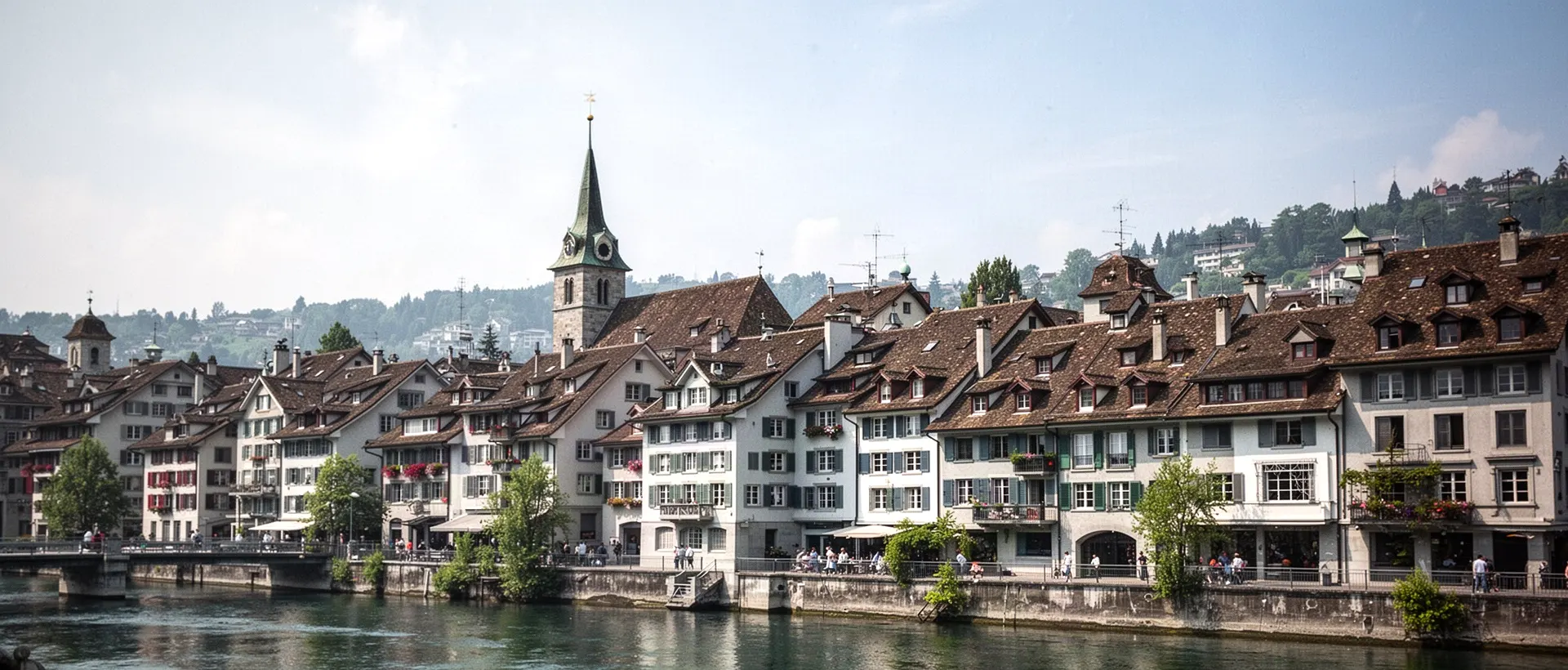
Zurich is the largest city in Switzerland and the main city of the canton of Zurich. A canton is a Swiss state with its own authorities, schools and rules, and it matters because many of your practical steps depend on it. The city lies at the northern end of a lake and is crossed by the Limmat river, with an old town of narrow lanes on both banks.
Daily life runs mostly in German, and you will hear Swiss German, the local dialect, in shops and on trams. English is widely understood in international workplaces and many services, but a few words of German go a long way. If that worries you, our page on Zurich without German takes it step by step.
The rhythm is calm and organized. Things start on time, public spaces are clean, and people value quiet in the evenings and on Sundays. Newcomers often say the city feels smaller than its reputation: you can swim in the lake after work or walk up a nearby hill on a weekend.
Who lives here
Zurich is already used to newcomers. At the end of 2025 the city counted 440,935 permanent residents (FSO, 2025). Of these, 150,726 were foreign nationals, which is 34.2% of residents (FSO, 2025). In plain words, about one resident in three comes from another country, so you will not be the only person asking how things work.
A family of four arriving from Singapore, for example, would find neighbors and classmates from many countries. This is a fictional example, but it reflects how international the city is.
Neighborhoods and nearby communes
Zurich is divided into districts, each with its own mood. Some are close to the lake and the old town, some are lively and full of cafés, and others are green and quiet, with more space for families. Beyond the city limits, nearby communes (Gemeinde, a local municipality) are popular with people who want gardens or a quieter street.
Choosing between them is a matter of commute, schools and budget, not just taste. If you are weighing a smaller neighbor, read about Winterthur, and for a side-by-side feel see Zurich or Geneva?. You can also try the city comparator.
The rental market: what to expect
Most people in Zurich rent rather than buy, and you will probably rent too. Apartments are described by the number of rooms, counting the living room but not the kitchen or bathroom, so a "3.5-room" flat has a living room and two or three bedrooms depending on the layout.
The average net rent in the city, across all sizes, was CHF 1,739 per month (FSO, 2022-2024 combined). Net means without extra charges for heating and similar costs, which are often billed separately. Smaller and larger homes differ a lot, as the chart shows. Please treat all of these as orders of magnitude, not as the price of a specific flat.
Source of the figures above: Federal Statistical Office (FSO), structural survey 2022-2024. Homes with six rooms or more are rarer, and the source warns that their averages are less precise.
Supply is tight. Across the canton of Zurich, 0.52% of dwellings were vacant on 1 June 2026 (FSO). That is a canton-wide figure, not a city figure, but it tells you the same thing every local will: start early and arrive with a complete file.
What a rental file usually holds
Landlords and property managers (régie) often ask for similar papers. You can prepare many of them from home:
- A copy of your passport or identity card
- Your employment contract or proof of income
- A reference from your previous landlord, if you have one
- A short, friendly cover letter about who will live in the home
- Proof of your permit status, once you have it
Our rental file check helps you see what is missing. Costs in more detail are on what Zurich costs to live in.
Schools for children
Children in Switzerland usually attend the public school of their commune, taught mainly in German. Many families from abroad also look at international schools, which teach in English and follow international programs.
The canton of Zurich lists several in the wider area: Inter-Community School Zurich (ICS) in Zumikon, Zurich International School (ZIS) in Wädenswil, Kilchberg and Adliswil, and International School Zurich North (ISZN) in Wallisellen. Note that these sit around the city rather than inside it, so your home and the school run are worth planning together. The list dates from November 2023, so check each school for its current offer.
Not sure which route fits your child? Try the school choice tool.
Getting in and getting around
The main gateway is Zurich Airport (Flughafen Zürich), which serves most long-haul routes. Train and tram connections are part of daily life in the city, but timetables and passes change, so check them with the operators before you travel rather than relying on a page like this one.
Your first days on the ground
Here is the order most newcomers follow:
- Register with your commune. In general you must announce your arrival to the commune where you live within 14 days. You will usually bring your identity document, your residence or work permit and proof of health insurance. The exact rules can vary by commune and canton, so confirm with your commune (Swiss federal government portal).
- Get to know the cantonal migration office. For Zurich this is the Migrationsamt des Kantons Zürich, which handles residence permits. Its official details are listed by the State Secretariat for Migration (SEM).
- Arrange health insurance. Basic health insurance is required for people living in Switzerland. The details depend on your situation.
- Open a bank account and sort out the basics such as phone and internet.
Which permit applies to you depends on your nationality and your reason for coming. The permit finder gives a first idea, and the authorities make the final decision. For a dated plan, use the relocation calendar.
Getting help with your move
You do not have to organize all of this alone. If you tell us about your plans through the request at the bottom of the page, we connect you with a relocation company that fits what you need. You can also start on the request page.
Frequently asked questions
Is Zurich a good place for newcomers from abroad?
Yes, it is used to international residents. About one resident in three is a foreign national (FSO, 2025), so the city has plenty of experience with newcomers.
What language do people speak in Zurich?
Daily life is mostly in German, with Swiss German as the spoken dialect. English is often understood at work and in many services.
How much is the rent in Zurich?
The average net rent across all sizes was CHF 1,739 per month (FSO, 2022-2024 combined). The real price of a flat depends on size, district and condition.
Is it hard to find an apartment?
Housing is tight. In the canton of Zurich, 0.52% of dwellings were vacant on 1 June 2026 (FSO). A complete file helps a lot.
Do I need a rental file?
Landlords commonly ask for identity papers, proof of income and sometimes a reference. Preparing these from home saves time.
Are there English-language schools?
Yes. International schools such as ICS, ZIS and ISZN operate in the area around the city. Check each school for places and current programs.
How do I register when I arrive?
You announce your arrival to your commune, generally within 14 days, with your identity document, permit and proof of health insurance. Details can vary by commune.
Which office handles residence permits?
In the canton of Zurich, the Migrationsamt des Kantons Zürich. The authorities decide on permits, not us.
Which airport serves Zurich?
Zurich Airport (Flughafen Zürich). Check connections with the transport operators.
Can you tell me which permit I will get?
No. A specialist can look at your situation, and the authorities decide. The permit finder gives a general first idea.
Sources
- Federal Statistical Office (FSO), permanent resident population
- Federal Statistical Office (FSO), average net rents in the largest cities
- Federal Statistical Office (FSO), vacant dwellings by canton
- Canton of Zurich, international and bilingual schools
- Zurich Airport
- State Secretariat for Migration (SEM), cantonal migration authorities
- Swiss federal government portal