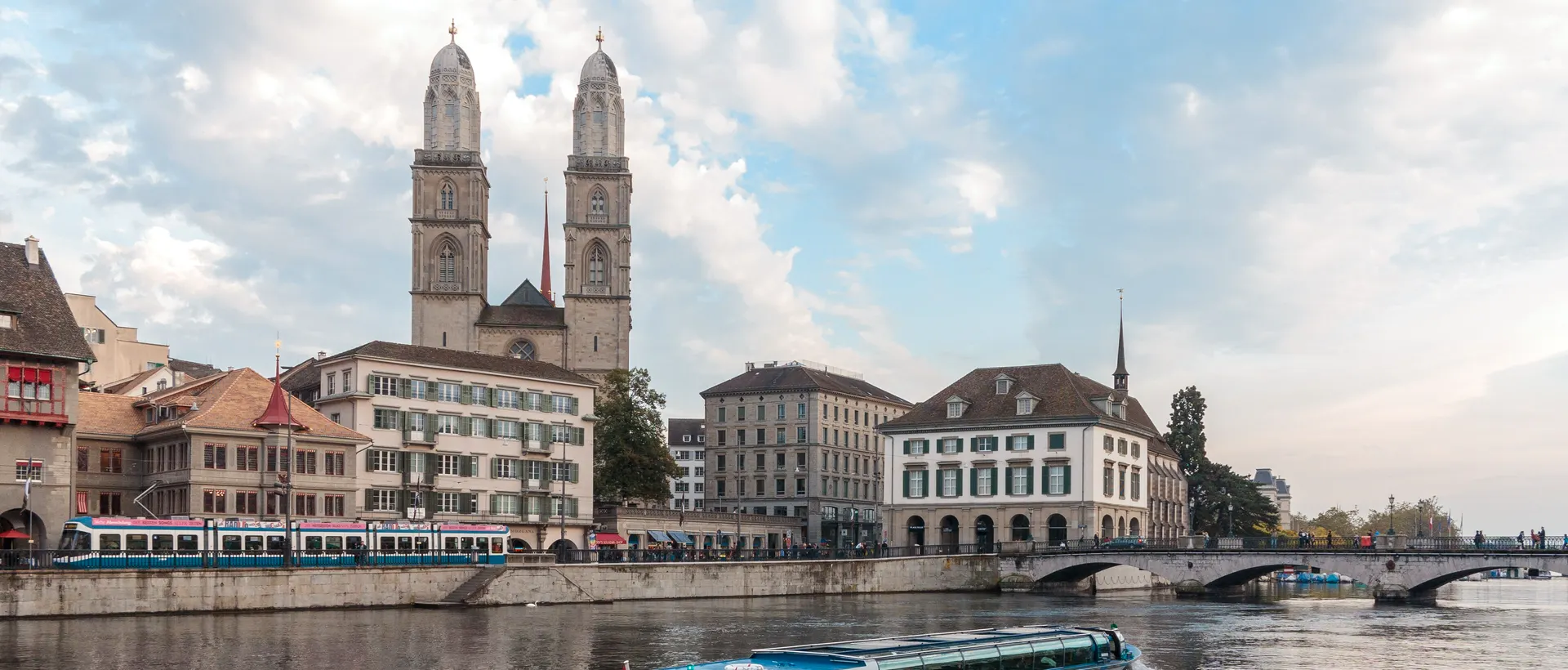
Picture a family landing in Zurich with two children and no German beyond "danke". Will they cope? For the first weeks, almost certainly yes. Over the years, the answer depends on what you want from life here. This page walks you through where English is enough, where it is not, and what you can prepare at home before you leave.
The short answer
You can live in Zurich without speaking German, and many newcomers do, especially at the start. Offices, universities, hospitals and many shops handle English comfortably. The city is used to people arriving from abroad: according to the Federal Statistical Office (FSO), about 34.2% of the people living in Zurich in 2025 were foreign nationals, roughly 150,726 out of 440,935 residents.
That mix helps. You will hear many languages on the tram, and nobody expects you to be fluent on day one.
But German is the language of daily life here. Signs, letters from authorities, school notes, rental contracts and neighbor notices usually come in German. English gets you a long way; German gets you the rest.
Where English works well
In these situations you can usually manage in English:
- International workplaces. Many teams work in English every day.
- Restaurants, cafés and central shops. Staff in the city center switch languages quickly.
- Public transport. Ticket machines and apps offer English.
- Private doctors and clinics. Many have English-speaking staff. See finding an English-speaking doctor.
- International schools. The Canton of Zurich lists schools such as Inter-Community School Zurich (ICS) in Zumikon, Zurich International School (ZIS) in Wädenswil, Kilchberg and Adliswil, and International School Zurich North (ISZN) in Wallisellen (Canton of Zurich, 2023 list). These are in the wider area, not only in the city itself.
- Zurich Airport. Signs and announcements are multilingual at Zurich Airport (Flughafen Zürich), your likely first stop.
Where German starts to matter
A few moments tend to surprise newcomers:
- Housing. Listings, viewings and contracts are mostly in German. Many landlords and property managers (Verwaltung or Liegenschaftsverwaltung) answer in German first.
- Official letters. Your commune (Gemeinde) and cantonal offices write in German. The cantonal migration office is the Migrationsamt des Kantons Zürich; its pages are in German, so be ready to use a translation tool. The official list of cantonal authorities is on the State Secretariat for Migration (SEM) site.
- Neighbors and local life. Clubs, parent groups, building notices and small talk happen in German or Swiss German.
- Public school. If your child joins a local public school, lessons and parent contact are in German.
- Emergencies and paperwork. Insurance forms, tax letters and bills arrive in German.
A useful rule: the more local the service, the more German you will meet.
Standard German and Swiss German
Here is a point that confuses many learners. People in Zurich speak a Swiss German dialect with each other, but write and teach in Standard German. Courses teach Standard German, and Swiss speakers will usually switch to it, or to English, if they see you are new.
You do not need to master the dialect to live comfortably. Start with Standard German, then pick up the local sounds as you go.
Switzerland is not one language area
Language changes by region. The map below gives a rough picture of where newcomers hear which language. Zurich sits in the German-speaking part, which is why German matters more here than in Geneva or Lugano.
If you would like a French-speaking or Italian-speaking setting instead, see Zurich or Geneva? and Lugano.
A first-weeks plan, step by step
You do not need to solve everything at once. Here is a calm order:
Before you leave home
- Start a short German course online, even a few minutes a day.
- Learn the words you will meet first: Anmeldung (registering with your commune), Mietvertrag (rental contract), Krankenkasse (health insurer), Aufenthaltsbewilligung (residence permit).
- Save a translation app and a dictionary for forms.
- Gather documents with certified translations where needed. Ask the authority what it accepts.
In your first days
- Register with your commune. Bring everything the office asks for, and ask for the instructions in writing.
- Ask for English where available, but do not count on it.
- Keep every letter in a folder, even ones you cannot read yet.
In your first months
- Join a German class near home or work.
- Practice with real tasks: ordering at the bakery, calling a repair person, reading your building notices.
- Look for language cafés and neighborhood groups.
Housing: the area where language matters most
Finding a home is often the first big test. According to the FSO, the average net rent in Zurich across all apartment sizes was CHF 1,739 per month (FSO, 2022-2024 combined). A 3-room apartment averaged CHF 1,761 (FSO, 2022-2024). These are averages for existing rentals, so new listings can differ.
Because listings and contracts are often in German, many newcomers ask a specialist to help. A relocation service can match you with a local professional who explains the process in English. For the wider picture, see what Zurich costs to live in.
Example: a couple with a toddler
Imagine a couple from Singapore with a toddler. Both work in English. They find a daycare place through their employer's contacts, order groceries online with the English version of the app, and see an English-speaking doctor. Yet when their landlord sends a letter about heating, it comes in German, and a neighbor leaves a note about the laundry room. They run both through a translation app and learn quickly. After a few months of evening classes, the notes stop feeling like a wall.
Example: a family choosing a school
Now picture a family from Pune with two school-age children. They do not want a language switch right away, so they look at international schools in the Zurich area. They know the fees and the commute need checking, and that a local public school would teach in German. Our school choice tool helps you think through the options.
Is Zurich the right place if you will not learn German?
Think about how long you will stay and how much you want to join local life. For a short assignment, English plus a few German phrases may be enough. For a longer stay, learning German opens doors: friendships, local clubs, easier paperwork and more choice of jobs and homes.
Smaller places nearby can feel more local, with less English around. Winterthur is a quieter option close to Zurich. For the city itself, read arriving in Zurich.
Getting help with the move
If you would like someone to explain the steps in English, send us the details of your plans through the request at the bottom of this page. We work with relocation companies in Switzerland and put you in touch with the one that fits your needs. A specialist can then look at your case, your permit route and your timing. You can also open tell us about your move.
Frequently asked questions
Can I live in Zurich with only English?
Yes, for a while. Many workplaces and services work in English, and the city is used to international residents. Daily life, official letters and neighbors will still bring German, so most people start learning soon.
Do I need German to get a permit?
Permit rules depend on your nationality, your situation and the canton. German is not the main question at the start, but the authority may ask about language later. The cantonal migration office will tell you what applies to you.
Which language do people speak in Zurich?
Mostly Swiss German in speech, and Standard German in writing and school. English is common in international workplaces and central areas.
Is Swiss German hard for learners?
It can be. It sounds quite different from Standard German. Start with Standard German; people will usually adapt when they hear you are learning.
Will shops and restaurants understand English?
In the city center, usually yes. In neighborhood shops, smaller towns and some offices, staff may prefer German. A friendly smile and a few German words help.
Can I find an apartment without German?
It is possible but harder, because listings, viewings and contracts are usually in German. Many newcomers use a translation tool or get specialist help with the search and the paperwork.
Are there English-speaking doctors in Zurich?
Yes, many practices have English-speaking staff. Check this when you pick one. See finding an English-speaking doctor for the method.
Which international schools are near Zurich?
The Canton of Zurich lists Inter-Community School Zurich (ICS) in Zumikon, Zurich International School (ZIS) in Wädenswil, Kilchberg and Adliswil, and International School Zurich North (ISZN) in Wallisellen. The list dates from November 2023, so check current details with each school.
Can my children go to a local school without German?
Local public schools teach in German. Children often adapt quickly, but ask the school and your commune what support exists for newcomers before you decide.
How long does it take to learn enough German?
It varies with your starting point, your time and how often you practice. Courses plus real daily use work best. Be patient with yourself.
Should I learn German before I move?
It helps to learn the basics, because it makes your first weeks calmer. But you do not need to be fluent before you arrive.
Is German easier to learn once I live in Zurich?
Many people find that everyday use speeds things up. Classes, work, neighbors and shop visits all give you practice.