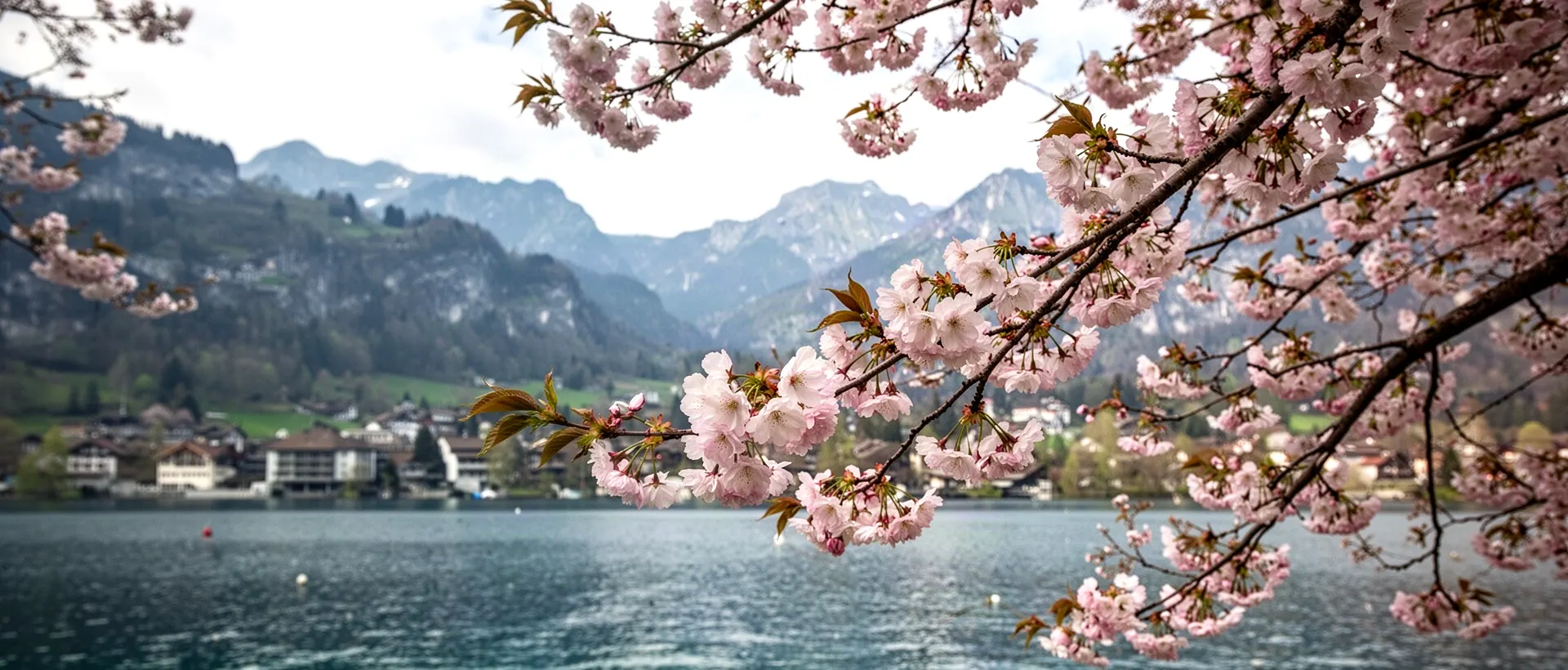
Moving to Switzerland from Japan is very doable, and it goes more smoothly when you know the order of the steps. Picture a couple from Osaka with a six-year-old child: a job offer in Switzerland, a flat to find, a school to choose, and a lot of paperwork in a language they do not speak yet. This page walks through it calmly, one stage at a time.
The big difference: Japan is outside the EU and EFTA
Switzerland has two admission systems. One covers citizens of the EU and EFTA countries, based on the free movement of persons agreement. The other covers everyone else, called "third-state" nationals, under the Swiss foreigners law (SEM). Japanese citizens belong to the second group.
In practice this means that a Swiss residence permit is not something you simply register for on arrival. For work, an employer in Switzerland usually applies for you, and the authorities look at the qualifications and the job. The State Secretariat for Migration (SEM) describes the rules on its page for third-state nationals. The conditions in detail depend on the canton and on the type of job, so they are worth checking with the authority itself.
If you are not sure which route fits your situation, the permit finder asks four short questions and points to the usual path. It gives a general idea only; the authorities decide.
What the annual quotas mean for you
For skilled workers from third states, Switzerland sets yearly limits. In 2026 the federal limit is up to 8,500 skilled workers and specialists from third states, split into 4,500 B permits and 4,000 L permits (SEM). The cantons then share out their part between employers.
What does that change for a family from Japan? It explains why timing and a complete file matter, and why an offer of employment is the usual starting point. It does not mean a permit is assured: the authorities decide on each application, and the numbers can change from one year to the next.
If you already have a job offer, the page for people with a Swiss job offer covers what usually comes next.
Before you leave Japan
Much of the work happens at home, and it is calmer to do it early.
- Check your documents. Passports, civil status papers and school records may be asked for. Ask the authority which ones need an official translation or a legalization stamp.
- Keep your Japanese records handy. Employment letters, tax records and insurance statements often help when you rent a home or open a bank account.
- Plan the calendar. The relocation calendar helps you put the steps in order.
- Build your own list. The personal checklist tool lets you tailor a list to your family.
- Think about pets. If a dog or cat is coming along, read about moving with a pet well before departure.
Choosing where to live
Switzerland is small, but cantons differ in language, taxes, rents and school systems. Zurich and Basel are mainly German-speaking, Geneva and Lausanne French-speaking, and Ticino Italian-speaking. Many international families pick a place near the employer and an international school.
The city comparator lets you put cities side by side. If you are heading to Zurich, the guide on relocation help in Zurich explains the local picture, and there is one for Lucerne too.
Finding a home from Japan
Renting is different from what you may know. Instead of a guarantor, landlords or property managers (régie, or Verwaltung) usually ask for a full rental file: identification, proof of income, an extract from the debt collection register, and often proof that your permit is on the way. Rent deposits are usually held in a blocked account in your name.
Viewings are often short and crowded, and a neat file makes a difference. The rental file check takes two minutes and shows what may be missing. Many people book temporary accommodation for the first weeks and look for a permanent home once they are in Switzerland.
Health insurance
Switzerland has no national public scheme like the one in Japan. Basic health insurance is compulsory for residents and is bought from private insurers, who must accept everyone for the basic cover. Premiums are paid by each person, children included, and they depend on the canton, the age group and the deductible you choose.
This is an area where a specialist examines your case, because the right choice depends on your family and your health needs. Do not assume that cover from Japan carries over after you register as a resident.
Schools for your children
Public school is free and taught in the local language. International schools teach in English and other languages, and they are often chosen by families who expect to stay for a limited time. Children who arrive at primary age often settle quickly in a public school, while teenagers may find an international school easier at first.
The school choice tool helps you think through the options for each child.
Taxes and money
Taxes are set on three levels: the federal government, the canton and the municipality. That is why the same salary can leave a different amount in your pocket in two different places. Tax rules for a person arriving from abroad depend on the permit and the canton, so we keep this general and leave the details to an expert who looks at your file.
Opening a bank account is usually done after you arrive and have a registered address. Keep your passport, your permit and your rental contract together for that visit.
The first weeks after arrival
Here is the usual order once you land:
- Register with the municipality (Gemeinde, or commune) where you live.
- Collect the residence permit card from the cantonal migration office, as the authority tells you.
- Take out basic health insurance.
- Open a bank account.
- Enrol your children at school.
- Sort out transport, phone and internet.
Daily life has its own habits too: recycling rules, quiet hours in apartment buildings, and shops that close early on Sundays. Neighbors usually appreciate a friendly hello.
How we can help
Relocation Swiss is a matching service. We work with the best relocation companies in Switzerland and, depending on your request, put you in touch with the one that fits your needs. You can read what relocation services cover and what immigration support means. When you are ready, the request at the bottom of the page is the place to start. You can also see how other Asian departures look, for example Singapore, South Korea, Hong Kong or China.
Frequently asked questions
Do Japanese citizens need a visa to live in Switzerland?
Staying long-term requires a residence permit, which is a different thing from a short visit. The rules for third-state nationals apply, and the authorities decide on each application. The SEM page gives the official overview.
Is Japan part of the EU or EFTA?
No. Japan is a third state, so the third-state admission route applies to Japanese citizens.
Can I move to Switzerland without a job offer?
Most routes for third-state nationals start from an employer, a family link or another specific reason. Other routes exist in some situations and are examined case by case.
Does the employer apply for the permit?
In most work cases, yes. The employer files the request with the cantonal authority. Your part is to provide the documents that are asked for.
What are the yearly quotas?
In 2026, the limit for third-state skilled workers and specialists is up to 8,500, with 4,500 B permits and 4,000 L permits (SEM). Cantons divide their share among employers.
Does a quota guarantee a permit?
No. A quota is a ceiling, not a promise. The authorities look at each application separately.
What is the difference between a B permit and an L permit?
Both are residence permits. In short, the B permit is the longer-term one and the L permit is a shorter-term one. The authority tells you which one applies.
Can my family come with me?
Family members can often apply to join, depending on the permit type and the rules that apply. A specialist can look at your situation.
Is health insurance compulsory?
Yes. Basic health insurance is compulsory for residents of Switzerland, and it is bought from a private insurer.
Will my Japanese insurance still work?
Do not assume so. Registered residents are covered by the Swiss system, and the Japanese scheme normally stops applying.
Is English enough to live in Switzerland?
In international workplaces and big cities, English goes a long way. For daily admin, the local language helps, and many people start lessons early.
How do I find an apartment before I arrive?
Start by preparing a complete rental file and search online from Japan. Many newcomers rent temporary housing first, then search from inside Switzerland.
Can I bring my pet?
Yes, in many cases, with some preparation. Read the page on moving with a pet before you book anything.
Where do I ask my own questions?
The FAQ page answers many questions about moving to Switzerland. For your own case, send a request at the bottom of this page.