Picture a couple from Austin with two kids in elementary school. They have a job offer in Zurich, a suitcase for each person, and a long list of questions. Where do we live? Which permit? Who pays the doctor? This page walks through the answers in the order you will meet them, from your kitchen table in the US to your first weeks in the city.
What Zurich looks like for a newcomer from the US
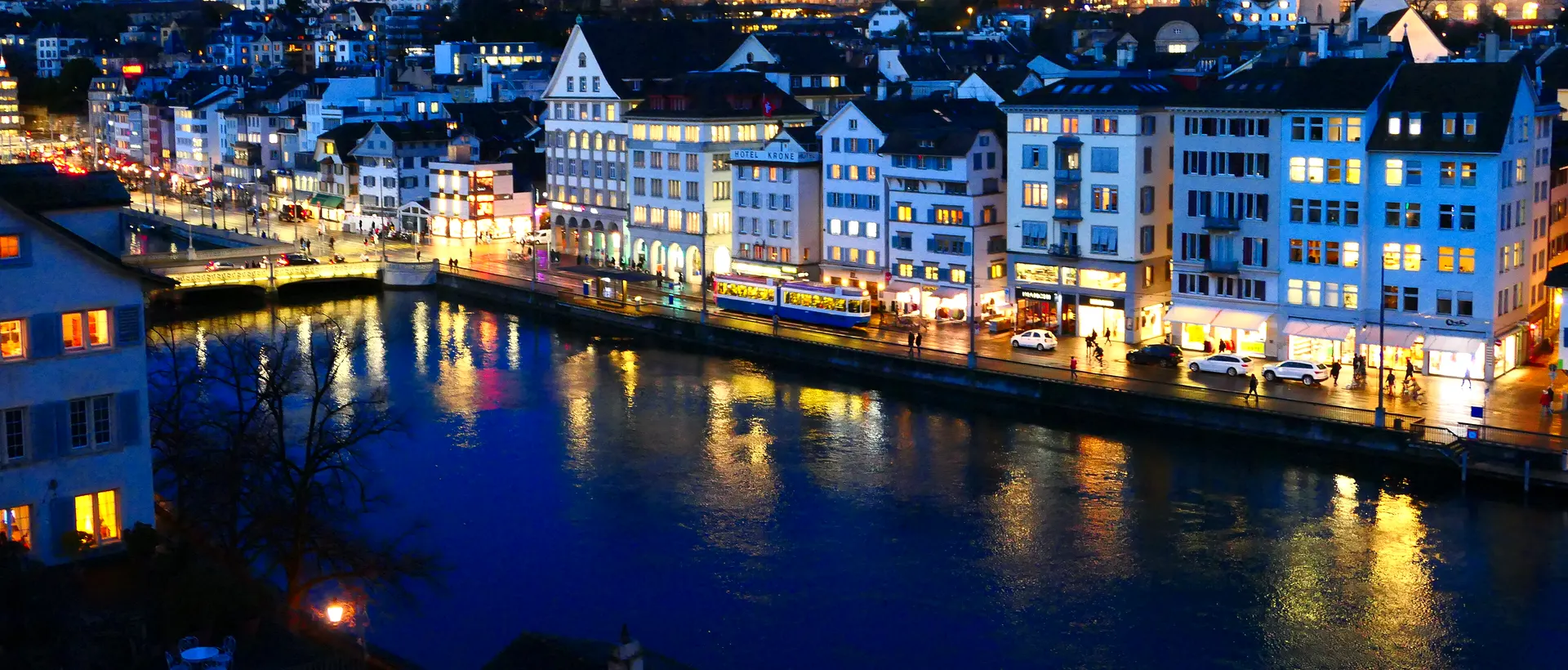
Zurich is the largest city in Switzerland and the capital of the canton of Zurich. At the end of 2025 about 440,935 people lived there permanently, and about 150,726 of them, or 34.2%, were foreign nationals (FSO). So you will not be the only person learning how things work. Colleagues, neighbors and parents at school will often have done the same move.
Day-to-day life happens largely in German. Many people speak very good English, especially at work and in international schools, but forms, letters from the authorities and the building notice board will usually be in German. Which languages the canton officially uses is something to confirm with the canton itself. Start a little German early; it makes the first weeks calmer.
How Switzerland treats Americans: the permit question
Switzerland has one set of rules for citizens of the EU and EFTA countries and another for everyone else. As a US citizen you are in the second group, often called "third-country nationals." That matters because admission is not automatic. In general, it is linked to a concrete reason to be in Switzerland, such as a job, and the authorities decide. Nobody else, including this site, can promise an outcome.
Here is the usual order of things for an employee:
- The employer in Switzerland starts the application with the cantonal authority.
- The cantonal office checks the file and, where the rules require it, passes it to the federal level.
- If approved, you receive an approval you use to enter and to register.
- After arrival, you register locally and receive your residence card.
Family members, spouses and children follow their own track, which depends on your permit. If you are not sure which route fits, try the permit finder for a general picture. A specialist can then look at your actual situation.
The cantonal office in charge of Zurich is the Migrationsamt des Kantons Zürich. Its contact details are in the official list of the State Secretariat for Migration (SEM).
The big differences from life in the US
Read the table as a map, not a rulebook. Each line has a longer story, and the next sections take them one by one.
Before you leave home: what you can prepare in the US
You cannot do everything from abroad, but a lot of the work happens before the flight. A calm preparation saves the most stress later.
- Documents. Gather passports, birth and marriage certificates, school records for your children, and your employment documents. Ask the authorities or your employer whether any need an official stamp or a translation.
- Insurance history. Request letters showing your past health coverage. Keep them in a folder you can reach quickly.
- Rental file. Switzerland's rental market is document-heavy. Check yours with the rental file check before you start applying.
- Bank and money. Some banks are careful about accounts for US citizens because of US tax reporting rules. Ask early what each bank needs, so you do not arrive without a way to pay rent.
- Taxes. The US taxes its citizens on income earned abroad, and Switzerland taxes residents too. How the two fit together depends on your situation, so a tax specialist should look at your case. Do not guess.
- Belongings. Decide what to ship, store or sell. Appliances and electronics from the US may not suit Swiss sockets and voltage.
Put dates on all of this with the relocation calendar, and read about the mistakes new arrivals make before you book anything.
Finding a home in Zurich
Housing is the part that surprises Americans most. Zurich is a city where many people rent for life, and the market is tight. Across the canton of Zurich, about 0.52% of dwellings were vacant on 1 June 2026 (FSO). That is a small share, and it explains why landlords can be selective.
The average net rent in the city of Zurich was CHF 1,739 per month for all sizes in the 2022 to 2024 survey (FSO). For a 3-room apartment, the average was CHF 1,761 (FSO). Treat these as orders of magnitude for existing leases, not as a price you will pay today; newly advertised apartments can cost more.
CHF 1,739 per month
Average net rent, all sizes
Source: Federal Statistical Office (FSO), 2022-2024
CHF 1,761 per month
Average net rent, 3-room apartment
Source: Federal Statistical Office (FSO), 2022-2024
0.52%
Vacant dwellings in the canton
Source: Federal Statistical Office (FSO), 1 June 2026
A few things to know:
- In Switzerland, rooms are counted including the living room but not the kitchen and bathroom. A 3-room apartment is what an American would call a two-bedroom.
- You apply with a file: ID, permit or job contract, and often a debt collection extract. Landlords or property managers (called Verwaltung or régie) choose among applicants.
- Many people start in a furnished or temporary place and look for a long-term home once they are on the ground.
If you are weighing cities, see Zurich or Geneva, or read how a move from the UK compares in From London to Zurich.
Health insurance: different from what you know
There is no employer plan to sign up for on day one. Instead, health insurance is individual and mandatory for residents, and you choose a provider and a plan yourself. The federal portal for residents explains the basics, and the Federal Office of Public Health oversees the system. Accident cover is usually organized through your employer if you work.
Choices like the deductible and the model of care change your monthly cost and your freedom to see doctors. A specialist can compare options for your household; this site cannot pick one for you.
Schools for your children
Families often choose between the local public school and an international school. The Canton of Zurich lists several international options around the city: Inter-Community School Zurich (ICS) in Zumikon, Zurich International School (ZIS) in Wädenswil, Kilchberg and Adliswil, and International School Zurich North (ISZN) in Wallisellen. That list covers the wider area, not only the city itself, and it dates from November 2023, so check the current offer with each school.
Public schools teach in German. Younger children often pick it up fast, while older teenagers may find the switch harder. The school choice tool and our guide to international schools around Zurich help you sort the options.
Your first weeks after landing
Zurich Airport (Flughafen Zürich) is the main gateway, and the city is easy to reach from it. For the exact connections and passes, check the operators' own timetables.
This is the usual order after you arrive:
- Register with your municipality. In many places this must happen within 14 days of arrival, though the exact deadline can vary by municipality. Bring your ID, your residence permit or work permit, and proof of health insurance (ch.ch).
- Take out basic health insurance. Do this as early as you can, and keep your coverage proof for registration.
- Open a bank account. You will need it for rent and salary.
- Enroll your children in school or in a daycare place.
- Set up your phone, transport and utilities.
- Check your driving license. As a person living in Switzerland, you can drive with a foreign license for 12 months, as long as you have not spent more than 3 months continuously abroad. After that you need a Swiss license, and the exchange application must be filed no later than one month before the 12 months end. If more than 5 years have passed since you entered the country, a control drive may be required. Whether you exchange without conditions or take an exam depends on where the license was issued and how long it is valid (Canton of Zurich).
Common questions about the process
If you want to see what a helped move looks like, send a request at the bottom of this page, or open tell us about your move. The people you are put in touch with look at your situation and tell you what applies.
Frequently asked questions
Do Americans need a visa to move to Zurich?
You need an authorization to live and work, not just a tourist entry. The type depends on your reason for coming, usually a job, and the authorities decide. Your employer or a specialist can explain which route matches your case.
Can I move to Zurich without a job offer?
It is difficult for US citizens. Admission is generally tied to a concrete reason such as employment, family or study. Other routes exist, handled case by case. A specialist can review what applies to you.
Does my spouse have the right to come with me?
Family members can often join, but it depends on your own permit. Rules differ for spouses and for children. Ask the cantonal office or a specialist before you book flights.
Will my US health insurance work in Switzerland?
Usually not as your main cover. Basic Swiss health insurance is mandatory once you live here. Keep your old policy only if you need it for trips back to the US, and ask the provider what it covers.
Do I have to pay taxes in both countries?
The US taxes citizens wherever they live, and Switzerland taxes its residents. How the two systems interact depends on your income and family. A tax specialist should examine your case.
Can I keep my US bank accounts?
Often yes, but rules and practices vary by bank. Check with your US bank before you leave. Some Swiss banks have extra steps for US citizens, so ask what each one requires.
Is English enough to live in Zurich?
At work and in international circles, often yes. For official letters, shops, doctors and neighbors, German helps a lot. Plan some lessons early.
How long does it take to find an apartment?
It varies. The market is tight, with a very low vacancy rate in the canton (0.52%, FSO). Many newcomers start with temporary housing and search from there.
What is the Migrationsamt?
It is the migration office of the canton of Zurich. It handles residence and work permits for people living in the canton. The State Secretariat for Migration (SEM) lists it among the cantonal authorities.
Do I need a Swiss driving license?
Not right away. You can drive with your foreign license for a limited period after you move, then you must exchange it or take other steps. Check the canton's page for the current process.
Can my children attend an international school?
Yes, several schools around Zurich offer international programs. Places depend on each school's admission rules, and fees and availability must be checked directly.
Should I register before or after finding housing?
You register with the municipality once you have an address and have arrived. Your lease or housing confirmation is often part of the paperwork, so plan housing first.
What if I forget a step?
Most steps can be fixed, but some have deadlines, such as registering and exchanging a license. The calendar helps you see them in order.
Sources
- Federal Statistical Office (FSO), permanent resident population by municipality
- Federal Statistical Office (FSO), average net rents in the ten largest cities
- Federal Statistical Office (FSO), vacant dwellings by canton
- Canton of Zurich, international and bilingual schools
- Zurich Airport
- State Secretariat for Migration (SEM), cantonal migration authorities
- Canton of Zurich, exchanging a foreign driving license
- Swiss federal portal for residents