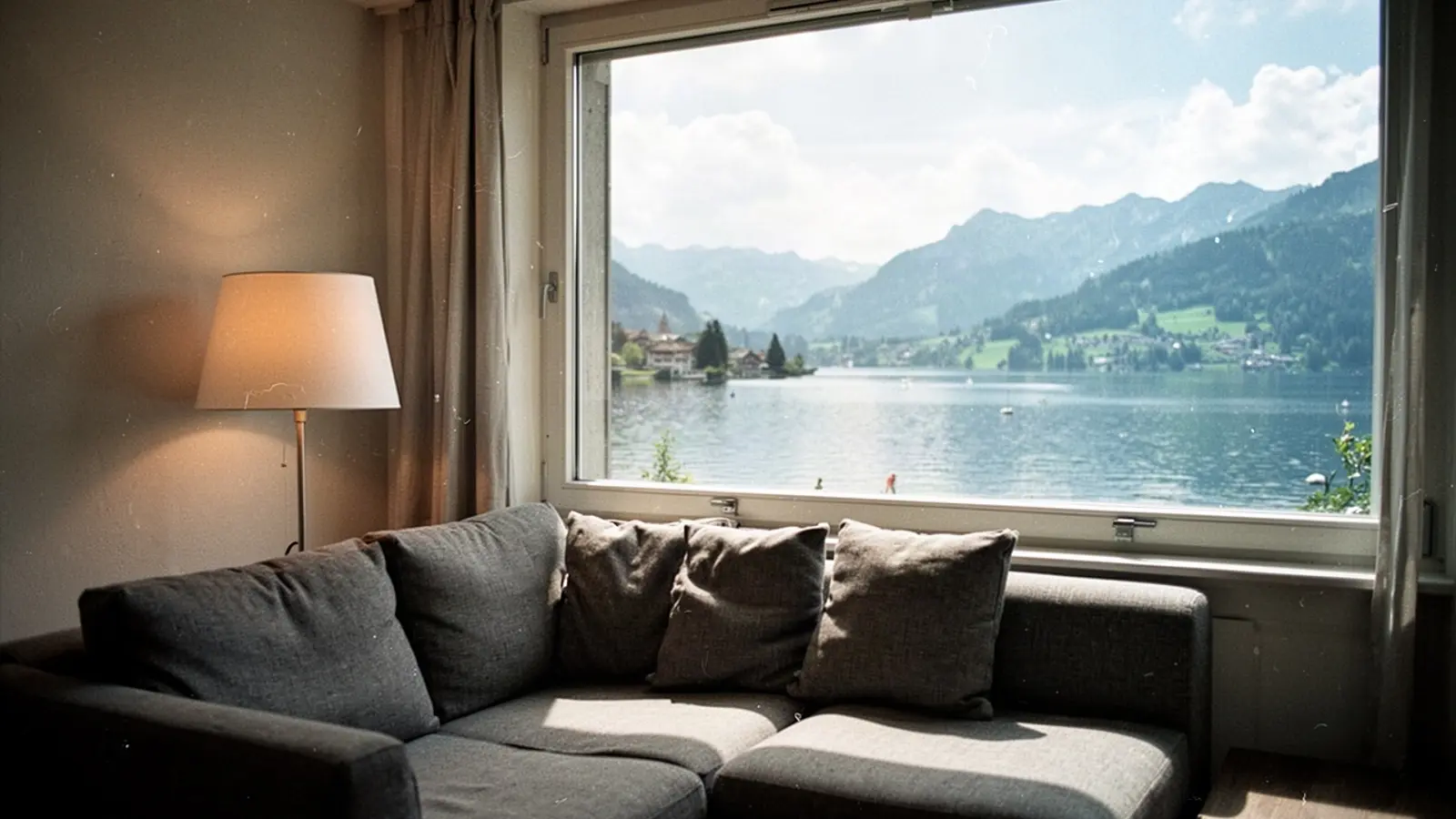
Arriving in Switzerland from London, Chicago, Mumbai or Singapore means landing in a country where the rental market has its own rhythm and its own paperwork. A furnished or temporary place is a bridge: a door you can open with a suitcase while the rest of your move catches up. This guide explains what that bridge looks like, how to prepare it from home, and which questions are worth asking before you book.
Why a temporary home is a common first step
A standard Swiss rental usually asks for a complete application file: identity documents, proof of income, a debt collection extract and often a residence permit. Many of these papers are easier to collect once you are on Swiss soil, or only exist after you have an address. That creates a loop that temporary housing helps to break.
Here is an example (fictional): a couple from Toronto accepts a job offer in Zurich. Their permit paperwork is moving, their shipment is still on the water, and their two children will start school in a few weeks. A furnished apartment gives the family beds, a kitchen and a quiet corner for homework while they visit unfurnished flats in daylight.
Temporary housing does not replace the long search. It gives it room to breathe. For the full picture of the standard route, see apartment hunting in Switzerland and how to rent an apartment when you are new here.
The main types of short-term housing
The labels vary by region and by provider, so the same word can mean different things. These are the categories you will meet most often.
Furnished apartments
A private flat with furniture, linen and a kitchen, offered on a fixed-term or flexible contract. The length, the notice rules and whether utilities are included are set in the contract, so reading it closely matters.
Serviced apartments
Furnished flats with hotel-style extras such as cleaning, a reception desk or a laundry room. The service level differs a lot between buildings, so ask for a clear list of what is included.
Corporate and assignment housing
Employers who relocate staff sometimes arrange furnished housing for a defined period. If you are being moved by a company, the first question is what your employer covers and for how long. Our page on corporate housing and employee moves goes deeper on the employer side.
Sublets and room rentals
A room in a shared flat or a sublet from a tenant who is away. These can be flexible, but the legal footing depends on what the main tenant is allowed to do, so details deserve a careful look.
Hotels and extended-stay rooms
The simplest option for the very first days. Facilities are limited, and cooking for a family can be awkward, but nothing is left to arrange.
How the choices compare
The table below gives a general picture. It is a rough guide, not a ranking: each situation weighs these points differently.
| Criterion | Furnished flat | Serviced flat | Sublet or room | Hotel |
|---|---|---|---|---|
| Kitchen | Usually yes | Usually yes | Often shared | Rarely |
| Extra services | Few | Often | Rare | Yes |
| Contract flexibility | Varies | Varies | Varies | High |
| Suits families | Often | Often | Depends | Limited |
What it means for your permit and registration
Temporary housing is still a real address, and that matters. In Switzerland, new arrivals report their arrival to the municipality. According to ch.ch, this registration happens within 14 days of arrival, and it can vary by commune or canton (R7). On site, the commune typically asks for an ID document, the residence or work permit and proof of health insurance.
Whether a short-term address is accepted for registration depends on the commune, and on the type of contract. A written contract with your name, the address and the dates is the document most authorities look for. Ask the commune in advance what it accepts, and ask your landlord or provider whether the contract can serve as proof of residence.
Admission rules also differ by origin. Switzerland has two regimes: EU/EFTA nationals under the free movement agreement, and nationals of third countries (SEM). For a short stay, the L permit page explains the permit type most often linked to limited stays, and the permit finder helps you see which route may apply.
Health insurance starts with your address
Anyone living in Switzerland is required to take out basic health insurance no later than three months after taking up residence. If that deadline is met, cover runs back to the date of arrival, and premiums are due from that date (FOPH). If the deadline is missed, cover starts at the date of joining, with a possible surcharge, and the canton may assign an insurer. This applies even when your first home is a furnished flat, so it helps to understand the clock early.
What a stay costs: reading the numbers carefully
Furnished and temporary housing is priced on its own terms, and there is no single figure that fits all. What the official statistics do show is the long-term market. In 2024, the average net rent for tenant households, excluding utilities, was CHF 1,485 per month (FSO). For three-room flats, the average net rent in 2024 was CHF 1,446 per month (FSO).
These are averages for ordinary leases across the whole country, and they are not offers. Rents in Zurich, Geneva or Zug often look different from the national picture, and a furnished flat is typically priced differently from an unfurnished one.
When comparing temporary offers, look at what the monthly price covers. These items are worth listing side by side:
- Utilities, internet and electricity
- Cleaning, linen and towels
- Final cleaning at the end of the stay
- Any deposit or booking fee, and when it comes back
- Local tourist or residence taxes, if any
- Parking, laundry access and storage
The order of steps, from abroad
A calm sequence helps more than speed. This is the order that tends to work.
- Clarify the length of stay. Your employer, school start date and permit timing shape the answer.
- Gather your documents: passports, contract or job letter, and permit papers when available.
- Shortlist the type of housing that suits the household, from a hotel to a furnished flat.
- Read the contract: dates, notice, what is included, deposit terms and house rules.
- Plan the arrival day: keys, address for registration, utilities.
- Register with the commune and organize insurance.
- Start or continue the long search at the same time.
Checklist before you book
- Written contract with your name, the address and the dates
- Clear list of what the price includes
- Confirmation that the address can be used to register with the commune
- Rules on pets, guests and smoking
- Notice terms if your plans change
- Deposit terms in writing
- Internet, laundry and kitchen equipment confirmed
- Travel time to the office or school
Pets can change the picture a lot, since many furnished buildings restrict them. The page on moving with a dog, cat or ferret covers the basics. If you are travelling with a car, see bringing your car to Switzerland.
Pitfalls that are easy to miss
- A name instead of a contract. A listing that promises a "flexible stay" without paperwork can leave you without proof of address.
- Fees outside the monthly price. Cleaning, booking and utilities are sometimes billed separately.
- Mismatched dates. A short contract that ends before the long lease begins leaves a gap.
- Photos that differ from the flat. A video visit before arrival is worth asking for.
- Subletting without consent. A sublet needs the main landlord's agreement, so ask to see it.
When the long lease comes next
At some point the temporary phase ends, and the application file for a regular lease takes over. The rental application file landlords expect lists the papers, and the rental file check gives a two-minute overview. Once you sign, the lease and rent deposit and the move-in inspection are the next topics. A week-by-week view lives in the arrival plan.
If you want a specialist to look at your own timing, family and budget, the request at the bottom of the page is the place to start.
Frequently asked questions
What is a furnished apartment in Switzerland?
It is a flat rented with furniture, linen and kitchen equipment already in place. Contracts differ from provider to provider, so the dates, notice rules and what is included should be read carefully.
Can I rent a furnished apartment for a short term before I arrive?
Yes, many providers handle remote bookings. A written contract, photos or a video visit, and a clear list of inclusions are the usual building blocks. Some require ID documents ahead of time.
What is the difference between furnished and serviced apartments?
A furnished flat comes with furniture. A serviced apartment adds hotel-style services, such as cleaning or reception. The exact list varies, so ask for it in writing.
Does a temporary address count for registration with the commune?
That depends on the commune and on the contract. Registration is generally due within 14 days of arrival (ch.ch), and a written contract with your name and dates is the document most often accepted. Ask the commune directly.
What does the commune ask for at registration?
Typically an ID document, the residence or work permit, and proof of health insurance (ch.ch). Requirements can vary by commune, so check the local website before arrival.
Do I need a permit before I book temporary housing?
Booking a place is a private matter between you and the provider. The permit is a matter for the authorities. Timing differs between EU/EFTA and third-country nationals, so the permit finder is a good first look.
Which regimes apply to EU/EFTA and third-country nationals?
Switzerland has two regimes: one for EU/EFTA nationals and one for nationals of other countries (SEM). The detailed conditions differ, and the authorities decide on each case.
Is health insurance needed during a temporary stay?
Basic health insurance is compulsory for people domiciled in Switzerland, within three months of taking up residence (FOPH). Cover is backdated if the deadline is met.
What happens if basic insurance is taken out late?
Cover starts at the date of joining, a premium surcharge may apply, and the canton may assign an insurer (FOPH). The details are set by the authority.
How long can a temporary stay last?
The length is set by the contract and, for permits, by the authorities. Contracts range from short to extended, and the right fit depends on your timeline.
Are utilities included in the price?
Sometimes. Some offers include electricity, heating and internet; others bill them separately. A line-by-line list in the contract settles the question.
Is a deposit usual for short-term housing?
Terms vary by provider. When a deposit is asked, ask in writing how much it is, where it is held and when it is returned.
Can I bring my pet to a furnished apartment?
Many buildings restrict pets or ask for extra terms. Check the rules before booking, and read the page on moving with pets.
Can families with children stay in temporary housing?
Yes, and many families do. Space, a kitchen and a quiet place for homework are the points to look at. School placement depends on the commune of residence, and the school choice tool can help you start.
Can I look for a long-term flat while living in temporary housing?
Yes. Many newcomers combine the two, visiting flats while the temporary place covers the gap. The relocation calendar helps lay out the timing.
What are the official average rents for ordinary leases?
In 2024, the average net rent for tenant households was CHF 1,485 per month, excluding utilities (FSO). For three-room flats it was CHF 1,446 (FSO). These are national averages for ordinary leases.
Are furnished rents the same as these averages?
No. The official figures describe ordinary leases. Furnished and temporary offers are priced by each provider, so only the offer itself gives a real number.
Is subletting allowed?
It generally depends on the consent of the main landlord and on the lease. Asking to see the written agreement is a sensible step.
Can my employer arrange the housing?
Some employers do, as part of a relocation package. What is covered and for how long is a question for your employer.
How do I get keys on arrival?
The provider sets this out: a handover meeting, a key box or a reception desk. Confirm the arrival time and the process before you fly.
Which documents are worth keeping ready?
Passports, the employment contract or job letter, permit papers when available, and the signed housing contract. A folder, paper or digital, makes registration smoother.
Can I use a hotel for the first days only?
Yes, it is a simple bridge. Cooking and space are limited, so families often move to a furnished flat after the first nights.
What if my plans change during the stay?
The notice terms in the contract apply. Ask about them before signing, and keep the dates flexible where you can.
Where do I compare Swiss cities before choosing?
The city comparator gives a side-by-side view. Local pages such as relocation help in Zurich and relocation help in Lucerne add a local angle.
Who can look at my own situation?
A specialist from the relocation companies we work with can review your case after you send the request. You can also see how we help and settling-in help.
Sources
Related pages
- Renting your first home in Switzerland, from sea
- How to rent an apartment when you are new here
- Apartment hunting in Switzerland
- The rental application file landlords expect
- The debt collection extract
- Your Swiss lease and rent deposit, clause by cla
- The move-in inspection
- Buying a home in Switzerland as a foreigner