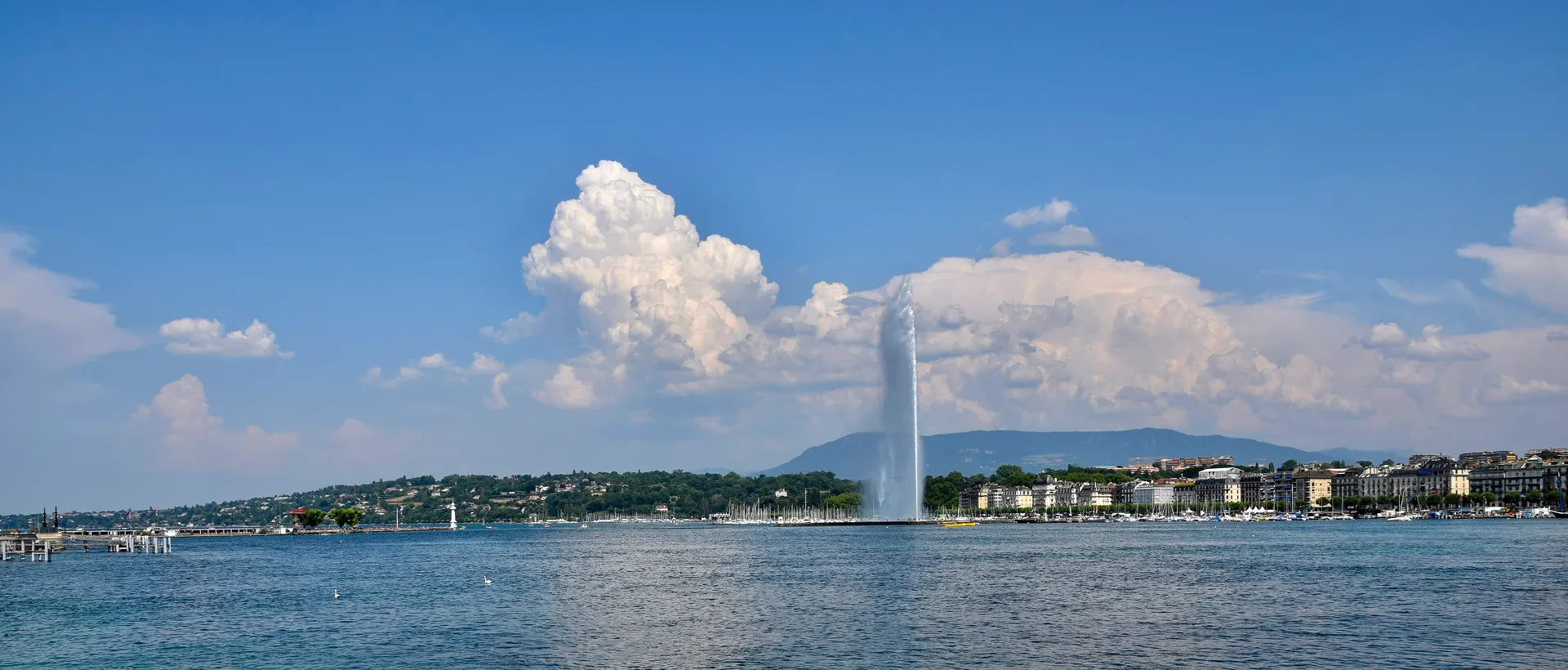
Picture a small city on a lake, with the Alps on the horizon and a French border a few minutes away. That is Geneva, and it is one of the easiest Swiss places to land in if you come from abroad. This page gives you the lay of the land before you ever book a flight: how the city feels, which areas suit which lifestyle, what rents look like, how schooling works and what the first days involve.
A city that is already international
Geneva is a small place with a big-world feel. In 2025 the city counted 211,152 permanent residents, and 106,763 of them (50.6%) were foreign nationals, according to the Federal Statistical Office (FSO). In practice, you will hear many languages on the tram, in the playground and at the market.
French is the everyday language of shopping, offices and local authorities. English gets you surprisingly far in international circles, but a few French phrases make daily errands smoother. Many newcomers start evening classes within their first weeks.
Life moves at a calm, orderly pace. Shops close early on Sundays, neighbors expect quiet in the evening, and recycling and waste rules are taken seriously. If you want a broader picture of Swiss habits, read what daily life in Switzerland feels like.
Neighborhoods: a first tour
You do not need to know the city to choose well. Think in terms of atmosphere rather than postcodes.
- Old Town and Plainpalais: cobbled lanes, cafés, university life and a lively market. Lively also means noisier.
- Pâquis and Servette: busy, multicultural and close to the station and the lake. Popular with younger couples and singles.
- Eaux-Vives and Champel: residential, green and close to lakeside paths. A favorite for families who want parks and walkable shops.
- Carouge: a village-like town with a Mediterranean feel, squares and small restaurants, joined to the city by tram.
- Lakeside communes such as Cologny or Versoix: quieter, with more space and often a longer trip into the center.
- Lancy and Meyrin: practical, well connected and often easier on the budget; Meyrin sits near the airport.
Each of these is its own commune (Gemeinde in German-speaking Switzerland, commune in Geneva), with its own services and local office. To compare Geneva with other Swiss cities, try the city comparator or read Zurich or Geneva?.
Renting: what the numbers say
Geneva's rental market is tight. On 1 June 2026, the vacancy rate across the canton stood at 0.31% (FSO). Such a low figure means that good apartments go quickly, and landlords or property managers (régies) often receive many applications for a single listing. The figure is for the canton; the rate for the city alone was not verified.
The average net rent in the city of Geneva was CHF 1,518 per month across all sizes, based on the 2022-2024 cumulated survey of the FSO. Larger homes cost far more, and the figures for six rooms or more are imprecise, so the chart below stops at five rooms.
These are averages of existing leases, not asking prices for a new listing, so treat them as an order of magnitude. A freshly advertised flat often costs more. A deposit and a complete application file are normally requested, so prepare your documents from home with the rental file check.
A typical order of steps looks like this:
If you are not sure which permit applies to you, the permit finder asks four questions and points you to the general route.
Schools and childcare
Imagine a family of four arriving from Singapore, with a child who is six and another who is twelve. The first question is usually: public school or international school?
Public schools teach in French and welcome children from all over the world, often with support classes to help new arrivals learn the language. International schools teach in English or bilingually, and many families choose them for continuity with the curriculum back home, especially when a stay may be short. A list of such schools has not been verified for this page, so check with the canton before relying on any name. Our page on international schools around Geneva and the broader guide to international schools in Switzerland explain the differences.
To narrow the choice by age and goals, the school choice tool helps you think it through. Places can be limited, so contact schools early, ideally before you travel.
Getting around, and the airport
Geneva International Airport is the main airport for the city and sits very close to the center. Routes, travel times and pass prices were not verified for this page, so check them with the railway and the local transport operators.
Many residents live without a car. Trams, buses, trains and boats across the lake cover most daily trips, and the rail network links Geneva with Lausanne and the rest of the country. Parking in the center is limited and costly, which is why many households keep a bicycle instead.
Your first days on the ground
The office that handles residence matters for the canton is the Office cantonal de la population et des migrations (OCPM), the cantonal population and migration office. Its official page is linked in the sources below.
Arrival in Geneva generally follows this order:
- Register with your commune after arriving. According to ch.ch, the deadline is usually 14 days, though it varies by commune and canton. Bring an identity document, your residence or work permit and proof of health insurance.
- Arrange basic health insurance, which is compulsory in Switzerland for residents.
- Open a bank account and set up a Swiss phone number.
- Enroll children in school or childcare.
- Learn the local rules on waste and quiet hours.
For a timeline you can tailor, use the relocation calendar and the personal checklist builder. If you come from China or the United States, the pages on moving from China and Switzerland or the US cover what differs from home. Budget questions are covered in the cost of living in Switzerland.
When you are ready, the request at the bottom of the page lets you describe your move, and a specialist looks at your case with a relocation company suited to your needs.
Frequently asked questions
Is Geneva a good place to live for newcomers from abroad?
For many people, yes. Over half of the city's residents hold a foreign passport (FSO, 2025), so meeting other newcomers is easy. The trade-offs are a tight housing market and a high cost of living.
What language do people speak in Geneva?
French is what you will hear in shops, schools and offices. English is common in international workplaces. Learning basic French helps with neighbors and authorities.
Which neighborhood is best for families?
Families often look at Eaux-Vives, Champel and lakeside communes for parks and calm streets, while Carouge appeals to those who like a village feel. The right choice depends on school location, commute and budget.
How hard is it to find an apartment in Geneva?
It is competitive. The canton's vacancy rate was 0.31% on 1 June 2026 (FSO), so applications are often numerous. A complete file, prepared before you arrive, makes a real difference.
How much does it cost to rent in Geneva?
The average net rent in the city was CHF 1,518 per month across all sizes in the 2022-2024 survey (FSO). A three-room home averaged CHF 1,508 in the same survey (FSO). New listings can be higher than these averages.
Can I look for a home before I move?
Yes, many people start online and then plan a short visit for viewings. Some landlords prefer applicants who are already in Switzerland, so prepare references and income documents in advance.
Do I need a car in Geneva?
Usually not. Public transport covers most of the city and surrounding communes, and many people walk or cycle. Check local operators for current passes and routes.
Should my children attend public or international school?
Both options exist. Public schools teach in French and help children integrate locally, while international schools teach in English and may suit short stays. Ask the canton and the schools for the current admission rules.
How do I register when I arrive?
Registration is made with your commune, normally within 14 days, though this can vary by commune (ch.ch). Bring identity documents, your permit and proof of health insurance. The OCPM handles residence questions at cantonal level.
Is health insurance compulsory?
Yes. Basic health insurance is compulsory for people living in Switzerland. The details of how and when to arrange it depend on your situation, and a specialist can examine your case through the request below.
Can I live in Geneva and work in France?
That is a cross-border arrangement, which this site does not cover. Our guides are written for people who move their home to Switzerland from abroad.
Sources
- Federal Statistical Office (FSO), permanent resident population
- Federal Statistical Office (FSO), average net rents in the ten largest cities
- Federal Statistical Office (FSO), average net rents by canton
- Federal Statistical Office (FSO), vacant dwellings by canton
- Geneva International Airport
- Canton of Geneva, cantonal population and migration office (OCPM)
- ch.ch, the Swiss authorities' portal